Second Hand Fridge Nairobi: 7 Essential Checks Before You Buy (2026 Guide)
A second hand fridge in Nairobi can save you anywhere from KSh 15,000 to KSh 60,000 compared to buying brand new — but only if you know what to check before handing over your money. Get it wrong and you’re looking at a noisy fridge that trips your electricity meter, warm shelves despite running all day, or a compressor that dies within six months. Knowing exactly what to look for when buying a second hand fridge in Nairobi is the difference between a smart buy and an expensive mistake.
This guide gives you a practical, no-fluff checklist — built around how the Nairobi second-hand market actually works.

Why Nairobi’s Second Hand Fridge Market Has Real Risk
Unlike buying a chair or a table, a fridge has a motor, refrigerant, and electrical components that are nearly impossible to assess from a photo or a quick look. Most sellers on casual listing sites — social media marketplaces, other local listing sites, WhatsApp groups — list their fridges as “working perfectly” with no way to verify the claim.
Compressor failure is the most common issue. Replacing a compressor costs KSh 8,000–KSh 18,000 depending on fridge size, often more than the fridge is worth. The other hidden killer is refrigerant leaks: the fridge appears to run but never reaches the right temperature. Recharging refrigerant costs KSh 3,000–KSh 6,000, and if the leak isn’t fixed first, the gas will escape again within weeks.
The good news: all these faults show clear warning signs if you know where to look.
7 Essential Checks When Buying a Second Hand Fridge in Nairobi
1. Listen to the Compressor for 5 Full Minutes
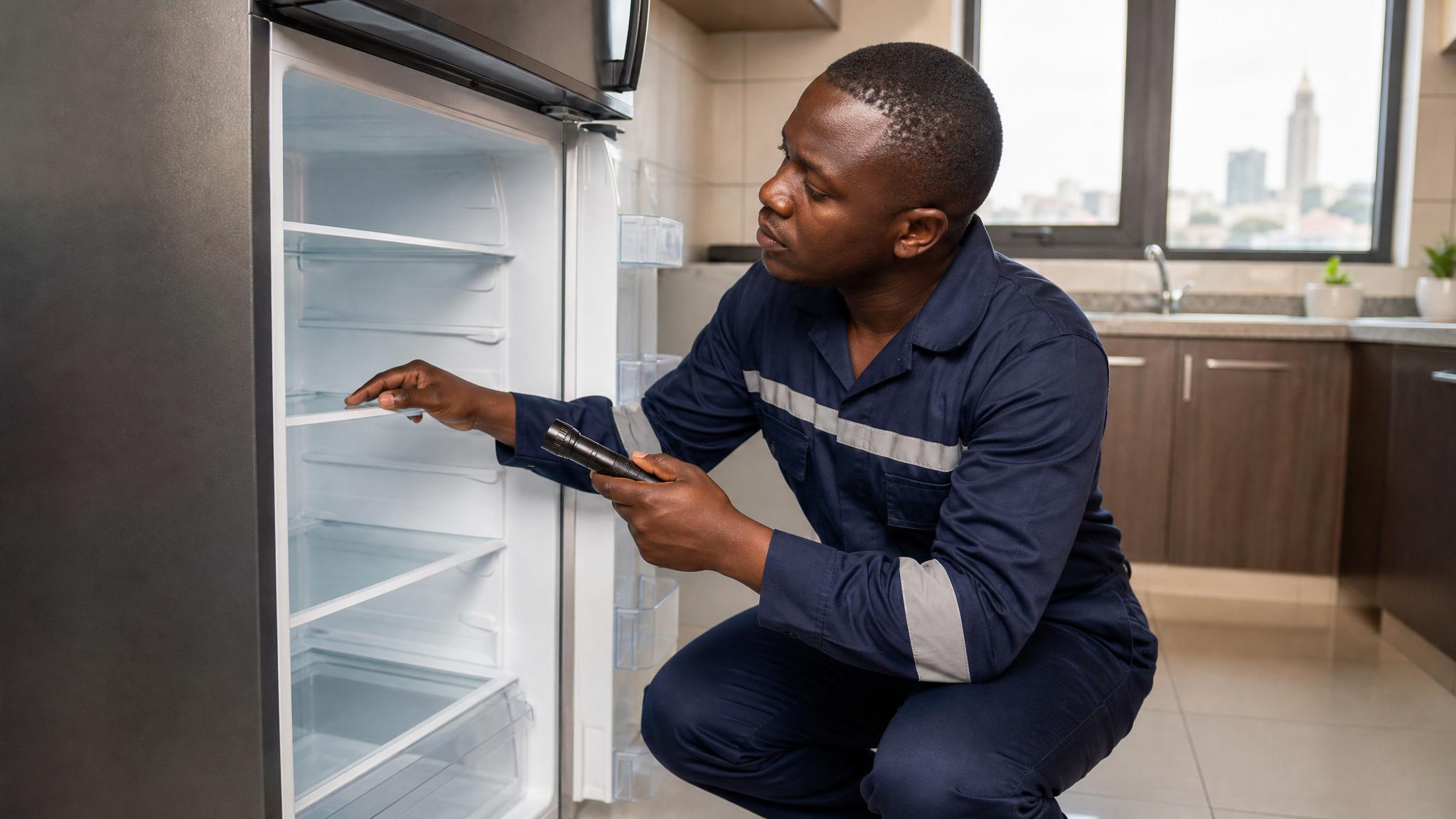
Plug the fridge in and wait. A healthy compressor starts smoothly, runs with a low steady hum, and cycles off after a few minutes. Listen for:
- Loud knocking or rattling — compressor is worn or misfiring
- Clicking repeatedly without starting — compressor relay is failing
- Running non-stop without cycling off — compressor is overworking; likely a refrigerant or thermostat issue
- Silence after plugging in — compressor may be seized or dead
💡 Pro Tip: Bring a simple thermometer. Set it inside the fridge on arrival. If the fridge has been running, the interior should be below 7°C. If it’s above 10°C after running for 15+ minutes, the cooling system is failing.
2. Check the Door Seals and Gaskets
The rubber gasket around the fridge door is cheap to ignore and expensive to fix when ignored too long. A broken seal means warm air constantly leaks in — the compressor overworks, electricity costs spike, and food spoils faster.
Test it: close the fridge door on a piece of paper. If you can pull the paper out easily, the seal is worn. Do this at multiple points around the door. Replacement gaskets cost KSh 1,500–KSh 3,500 depending on the fridge model — factor this in when negotiating the price.
3. Inspect for Rust, Dents, and Interior Cracks
Surface dents are cosmetic and negotiating leverage. Interior rust is a red flag. Rust on the inside walls or around the freezer compartment means moisture has been getting in repeatedly — often a sign of poor maintenance or a cracked liner. A cracked interior plastic liner is difficult and expensive to repair and will worsen over time.
Check the freezer section carefully. Ice buildup that goes more than an inch thick suggests the auto-defrost system has failed. Manual defrost fridges are fine, but auto-defrost units should cycle and melt frost regularly.
4. Verify the Thermostat Controls Work
Turn the temperature dial from minimum to maximum and back. You should hear the compressor respond — speeding up on higher settings, slowing or cycling off on lower ones. A thermostat that does nothing when you turn it is either disconnected or failed. Budget KSh 1,200–KSh 2,500 for a thermostat replacement.
💡 Pro Tip: For older fridges (Miele, Samsung, LG models from 2010–2018), ask the seller if they have the original manual or receipt. Fridges with full service history in Nairobi command a 10–15% premium but are worth it — you know exactly what you’re buying.
5. Check Energy Consumption — Ask or Calculate
Electricity in Kenya is not cheap. A poorly maintained or older-model fridge can consume 2–3× more electricity than a comparable newer unit. Look for the energy rating sticker (usually on the side or back). If it’s missing, ask what brand and model it is, then look up the rated wattage.
As a rough guide:
- 100–150W rated: Efficient — good for Nairobi’s electricity costs
- 200–300W rated: Acceptable for larger fridges (300L+)
- 350W+ rated: Old or poorly maintained; your electricity bill will reflect it
A fridge running at 200W for 12 hours a day uses about 2.4 kWh daily. At Kenya Power’s domestic rate of roughly KSh 23/kWh, that’s ~KSh 1,650/month just for the fridge. Run the numbers before you buy.
6. Confirm the Freezer Actually Freezes
It sounds obvious but is often skipped. Touch the freezer walls — they should feel very cold, even icy, after the unit has been running. If the freezer is soft or merely cool, the refrigerant is low or there’s a leak in the system. Avoid any fridge where the seller can’t demonstrate an actively cold freezer.
For combination fridges (fridge + freezer), check both compartments separately. Some units have a functioning fridge compartment but a compromised freezer, particularly in older Samsung and LG side-by-side models.
7. Negotiate Based on Age, Size, and Market Rate
Used fridge prices in Nairobi generally follow this range (mid-2026):
- Small bar fridge (50–100L): KSh 5,000–KSh 12,000
- Medium upright (150–250L): KSh 12,000–KSh 25,000
- Large family fridge (300L+): KSh 25,000–KSh 50,000
- Double door / side-by-side (400L+): KSh 40,000–KSh 80,000
Fridges older than 10 years should be priced in the lower third of each range, regardless of condition — parts are harder to source and efficiency is worse. Fridges under 5 years old in good condition justify the upper third. Use the fault checks above as negotiating ammunition: a worn door seal is worth KSh 2,000–3,500 off the asking price.
What to Do If You’re Buying Online in Nairobi
If you’re buying via an online platform, never pay before an in-person inspection. Arrange to visit the seller at the fridge’s current location — not a neutral meeting point where they’ve transported it. Fridges that have been moved and unplugged recently can take 4–6 hours to reach full operating temperature, masking cooling problems.
Platforms like Corido Marketplace inspect and grade items before listing, which removes much of the guesswork. Every listed appliance is physically checked so you know its actual condition — not just what the seller says about it.
If you’re sourcing from other local listing sites or social media marketplaces, apply every check on this list without exception. Bring a friend who can help you listen for compressor sounds while you check other components.
Red Flags — Walk Away Immediately
- Seller won’t plug it in for you to test
- Fridge has been “just brought from storage” and needs time to settle
- No visible model sticker or serial number (may be stolen)
- Strong chemical smell inside (refrigerant leak)
- Excessive rust on coils at the back
- Price is suspiciously low with no clear reason
A genuinely good used fridge doesn’t need excuses. If the seller is making a lot of them, trust that instinct.
How Corido Makes Buying a Used Fridge Safer
At Corido, every second hand fridge listed on the marketplace is physically inspected and graded before it goes live. You can see the condition grade — not just a seller’s description — before you commit. This is particularly valuable for appliances where hidden faults are common and repair costs are high.
Browse current second hand fridges and appliances on corido.co.ke or read our guide on where to buy and sell used electronics in Kenya for more tips on sourcing quality used appliances in Nairobi.
For general tips on what to look out for when shopping second hand, see our article on is it worth buying second hand furniture in Kenya — many of the same principles apply to appliances.
If you’d prefer expert eyes before you buy, reach out to us directly — our team can advise on specific models and help you source what you need.
📞 0794858010 | ✉️ ask@corido.co.ke
📍 Lavington, Amboseli Road, opposite Serengeti Apartment, Nairobi | View on map →
🌐 corido.co.ke