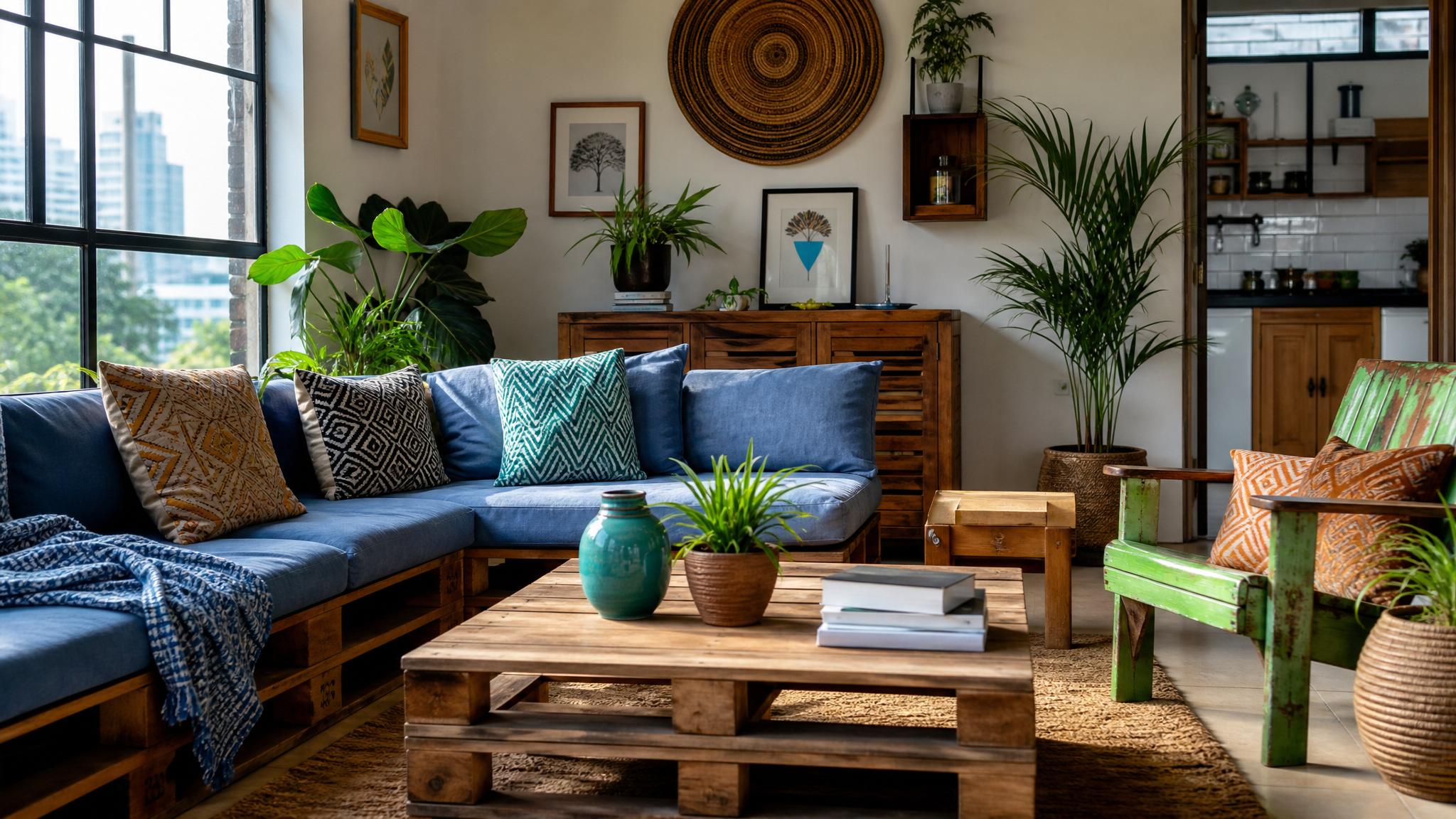
Circular Economy Kenya Buying Second Hand: 5 Powerful Reasons to Join the 2026 Movement

The global resale market hit $227 billion in 2023 and is projected to double by 2028. While headlines focus on New York and London, something equally significant is already happening in Nairobi. Circular economy Kenya buying second hand isn’t a trend imported from the West — it’s a formalisation of how Kenyans have always done things smartly. In 2026, it is becoming the mainstream.
What “Circular Economy Kenya Buying Second Hand” Actually Means
Strip away the buzzwords: the circular economy is simple. Things get used, not wasted. Instead of the linear “buy → use → dump” model, goods circulate — from one household to the next, from business to home, from upgrade to second chance.
Kenya has lived this model for decades. Mitumba markets, jua kali workshops repairing appliances, furniture passed between families — this is circular economy without the label. What is changing now is the formalisation. As urban Kenya grows a confident middle class with high standards and tighter budgets, the appetite for quality second-hand goods is expanding rapidly.
💡 Pro Tip: Buying second-hand from a verified platform like Corido is not settling — it’s optimising. A Grade A sofa inspected and certified at Corido’s Lavington warehouse is a smarter purchase than a cheap new couch from a showroom with zero quality guarantees.
3 Forces Driving the Circular Economy in Kenya Right Now
1. Economic Pressure is Reshaping How Kenyans Buy
Inflation has reshaped household budgets across Nairobi and Kenya’s major towns. A brand-new L-shaped sofa might run KSh 80,000. A quality used one — inspected, graded, and verified — costs KSh 20,000–35,000 with the same practical lifespan. Smart spending is replacing status spending. This is not compromise; it is intelligence.
2. Urban Density Creates Supply
Nairobi’s apartment culture means people move frequently. Offices downsize. Businesses wind down or upgrade. Hotels refurbish. Every transition generates quality goods that need somewhere to go — and a buyer ready to receive them. The supply of quality second-hand goods in Nairobi is growing every year, and so is the infrastructure to find it.
3. Sustainability Becomes a Purchasing Signal
The next generation of Kenyan buyers — urban, connected, globally aware — increasingly factors environmental impact into decisions. Buying second-hand is no longer just thrift. It is a values statement. According to National Environment Management Authority (NEMA), Kenya generates over 2,500 tonnes of solid waste daily in Nairobi alone — with furniture and household goods representing a significant portion. Buying second-hand directly reduces this burden.
What the Circular Economy Looks Like in Practice for Kenyan Buyers
Here is the practical difference between circular and linear purchasing in Kenya:
- Linear buyer: Buys new sofa for KSh 75,000. Uses it for 5 years. Sends it to Ngong Road dump when moving. Repeat.
- Circular buyer: Buys Grade A second-hand sofa for KSh 28,000. Uses it for 5 years. Sells it on Corido for KSh 12,000–15,000 when moving. Net cost of use: KSh 13,000–16,000 over 5 years. That’s the circular economy working for you.
The circular model doesn’t just save money — it preserves value across the product’s life. Your furniture becomes an asset you can recover value from, not just a cost you write off.
💡 Pro Tip: When you buy second-hand through Corido, you’re also setting up a future resale opportunity. When you upgrade or move, Corido can list your items on consignment — recovering value that a landfill-bound piece would never return. This is circular economy in action, not just a concept.
Where Corido Fits in Kenya’s Circular Economy
Corido is not a classifieds site with a sustainability rebrand. It is being built from the ground up as recommerce infrastructure for Kenya — the system that makes buying and selling second-hand household goods trustworthy, efficient, and worth your time.
- Structured service tiers: List it yourself, hand it off on consignment, or sell outright for immediate cash — there’s a path for every situation.
- Quality as a filter: Not everything makes it onto Corido. That curation is intentional. Buyers trust what they see because sellers are held to standards.
- Value recovery, not disposal: The goal is to extract real value from goods that still have life — and connect them to buyers who need exactly that.
For urban Kenyan households upgrading their space, for businesses clearing office assets, for anyone sitting on goods that deserve a second act — Corido is building the infrastructure to make that exchange seamless across Kenya.
For practical buying guidance, read our Smart Buyer’s Guide to Second-Hand Furniture in Kenya — 7 tips on buying well, checking condition, and getting real value from the second-hand market.
The Smartest Move in 2026: Embrace the Circular Economy
Buying second-hand used to carry a stigma. That era is ending — globally and in Kenya. The buyers leading this shift are not settling. They are optimising. They are getting better furniture for less money, reducing waste, and participating in an economy that actually makes sense for their budgets and their city.
If you have been sleeping on recommerce, 2026 is the year to wake up. The goods are there. The buyers are there. The infrastructure is here.
Reason 4: Kenya’s Recommerce Market Is Now Formalised Infrastructure
Five years ago, buying second-hand in Nairobi meant navigating Gikomba alone — no price transparency, no returns, no quality guarantees. That friction was real. In 2026, it no longer exists in the same form.
Kenya’s recommerce market now has infrastructure: vetted platforms with condition grading, transparent KSh pricing, delivery logistics, and verified sellers. Corido, for example, inspects every item before listing — photographing defects, verifying functionality, and publishing clear price benchmarks. The old risk — “you might be buying someone else’s problem” — has been largely engineered out of platforms that take curation seriously.
For buyers, this matters enormously. The only remaining risk is comparable to buying new from a dealer: you are trusting the inspector, not the stranger.
Reason 5: Smart Depreciation Works in Your Favour as a Buyer
Furniture depreciates the moment it leaves the showroom floor — often 30–50% in the first year. When you buy second-hand, you skip that first-year depreciation cliff entirely. The piece you buy for KSh 18,000 was likely a KSh 55,000 item eighteen months ago. Its useful life is largely intact; its price is not.
In 2026, with Nairobi’s cost of living rising and household budgets under pressure, buying at post-depreciation prices is one of the highest-ROI decisions available to consumers. And unlike many “budget” strategies, this one does not require sacrificing quality — it requires accessing quality that has already absorbed the premium tax.
Pro Tip: When you buy a piece at KSh 18,000 that retailed at KSh 55,000, you also have a clear ceiling on future resale loss. Second-hand items at the right price hold value far better than new.
📞 0794858010 | ✉️ ask@corido.co.ke
📍 Lavington, Amboseli Road, opposite Serengeti Apartment, Nairobi | View on map →
🌐 corido.co.ke