Sell Hotel Furniture and Equipment in Kenya: 7 Proven Steps to Get Maximum Returns (2026 Guide)

If you need to sell hotel furniture and equipment in Kenya — whether you’re refurbishing, closing, downsizing, or transitioning ownership — the process is very different from offloading a household item or two. Hotel assets come in bulk, carry institutional quality, and require a buyer with the capacity, logistics, and market knowledge to handle them properly. Done right, you recover significant value. Done poorly, you end up giving away quality items for a fraction of their worth. This guide walks you through 7 proven steps to get maximum returns.
Why Selling Hotel Furniture and Equipment in Kenya Is More Complex
Hotels accumulate assets at scale: beds, mattresses, wardrobes, desks, chairs, dining tables, commercial kitchen equipment, reception desks, outdoor furniture, laundry machines, and more. When it’s time to offload these, the typical approach — posting individual items on listing sites — quickly becomes unworkable.
You’re dealing with dozens or hundreds of identical units. You need a buyer who can inspect on-site, commit to bulk volumes, arrange collection logistics, and complete payment in a structured way. Kenya’s second-hand market has grown significantly, but finding the right channel for commercial-grade, bulk hotel assets still requires knowing where to look.
💡 Pro Tip: The biggest mistake hotel sellers make is pricing each item individually and then being shocked when buyers don’t show up. Bulk hotel furniture moves fastest when sold as curated lots — e.g. “20 x single beds with mattresses” or “complete dining set for 60 covers.” Buyers pay more for ready-to-use lots.
Step 1 — Conduct a Full Asset Inventory Before Approaching Any Buyer
Before you contact anyone, know exactly what you have. Create a spreadsheet with:
- Item category (bedroom furniture, dining, reception, kitchen, outdoor)
- Quantity of each item
- Condition (excellent, good, fair, worn)
- Approximate age (if known)
- Brand or origin for equipment items (important for pricing)
- Dimensions for large furniture (aids logistics planning)
A buyer who receives a proper inventory sheet will take you more seriously, move faster, and give you a more accurate offer. It also prevents post-deal disputes about what was included.
Step 2 — Grade and Sort Your Hotel Assets Honestly
Condition grading determines price. Be honest — experienced buyers will inspect on-site, and discrepancies between your description and actual condition slow deals down or kill them.
What Good-Condition Hotel Furniture Looks Like
In Kenya’s second-hand market, commercial hotel furniture generally falls into three grades:
- Grade A — Excellent: Structurally sound, clean, no major scratches, tears, or stains. Ready for immediate reuse. Commands the highest price — KSh 4,000–8,000 per hotel single bed unit (frame + mattress), for example.
- Grade B — Good: Light cosmetic wear — minor scratches on wood, small fabric fades — but fully functional. Still very saleable. Commands 40–60% of Grade A price.
- Grade C — Fair/Worn: Visible wear, stains, or repairs needed. Still usable but priced accordingly. Sells to budget buyers, hostels, and boarding schools.
Items that are structurally broken, mouldy, or pest-damaged have very limited resale value — factor this in early.
💡 Pro Tip: Commercial hotel mattresses are often in better condition than they look. A professional steam clean before assessment can move a mattress from Grade B to Grade A — recovering KSh 1,000–2,000 per unit in added value. For 50+ mattresses, that’s a significant difference.
Step 3 — Understand Realistic Market Value in Kenya
Pricing hotel assets in Kenya requires understanding what the local second-hand market will actually pay — not replacement cost, not imported new price. Here are realistic benchmarks as of 2026:
- Hotel single bed (frame + mattress, Grade A): KSh 4,000–8,000
- Hotel double/queen bed setup (Grade A): KSh 8,000–18,000
- Hotel wardrobe (solid wood, good condition): KSh 5,000–12,000
- Dining chair (commercial grade): KSh 800–2,500 each
- Dining table (6-seater, commercial): KSh 6,000–15,000
- Reception/front desk unit: KSh 15,000–40,000 depending on size
- Commercial fridge or freezer (working): KSh 20,000–80,000
- Industrial washing machine (working): KSh 30,000–120,000
These are buyer-pays-at-collection figures. If you need the buyer to arrange collection and logistics, factor in a small concession — typically 10–15% — to attract committed buyers who take away the logistics burden.
For a detailed breakdown of appliance pricing, see our guide: How to Sell Used Appliances in Nairobi: 7 Proven Steps to Get Top Shilling.
How to Sell Hotel Furniture and Equipment in Kenya for Maximum Returns
This is where strategy matters most. There are three main routes, each with different speed, price, and effort tradeoffs:
Option A: Sell via a Trusted Second-Hand Marketplace (Best for Bulk)
A specialist second-hand platform like Corido Marketplace is designed for exactly this scenario. Corido sources quality second-hand goods — including bulk hotel and commercial assets — and connects sellers with vetted buyers across Nairobi and Kenya. The advantage: one conversation, one inspection, one committed offer, structured handover. No fragmented individual sales.
Option B: Direct Sale to Institutions (Schools, Churches, Guesthouses)
Secondary schools, churches, boarding facilities, and budget guesthouses are active buyers of hotel-grade furniture. The quality is right for their needs, and prices are within their budgets. The downside: sourcing these buyers takes time, and most won’t take the full volume — you’ll end up managing multiple transactions.
Option C: Sell Individual Items on General Listing Platforms
Posting items individually on other classifieds platforms can work for high-value one-off items (a specific commercial fridge, a large reception desk), but is inefficient for bulk hotel furniture. You’ll spend weeks managing inquiries, no-shows, and low-ball offers. Best reserved for specialty items that a bulk buyer passes on.
Step 5 — Prepare Properly for Inspection and Bulk Collection
Once a buyer is engaged, the inspection and collection phase determines whether the deal closes smoothly or drags on. To speed things up:
- Consolidate items by category in accessible areas — don’t make buyers hunt through every floor
- Ensure access — confirm lifts are working, loading bays are clear, and your team is available on the inspection day
- Have keys and instructions ready for any mechanical equipment
- Clarify your deadline upfront — if you need the property cleared by a specific date, say so early; buyers often prioritise urgent sellers
For businesses managing a full property clearance, this also relates to asset disposal more broadly. See our guide: How to Liquidate Business Assets in Kenya: 7 Proven Steps for Maximum Returns.
Step 6 — Negotiate Fairly and Know Your Walk-Away Price
Before any negotiation, decide your minimum acceptable total. This prevents emotion-driven decisions on the day. A few principles that work well in Kenya’s commercial second-hand market:
- Bundle for value: Buyers pay more per unit when lots are complete. “20 x beds with mattresses and wardrobes” commands a better per-unit price than selling each separately.
- Don’t anchor too high: Buyers who feel your opening price is unrealistic walk away rather than counter-offer. Price at the top of realistic, not above it.
- Factor in the cost of NOT selling: Storage fees, property rent extension, staff time spent managing unsold inventory — these carry real costs. A slightly lower offer today may beat the cost of holding out for three more months.
Step 7 — Protect the Transaction with Proper Documentation
For bulk commercial transactions, basic paperwork protects both parties:
- Asset list/sale agreement: A signed list of items sold, quantities, and agreed price
- Payment confirmation: M-Pesa transaction records, bank transfer receipts, or cheque confirmation before any items leave the property
- Collection receipt: Signed acknowledgment that items were collected in agreed condition
This is especially important for hotel groups or companies where asset disposal is subject to internal audit. The Kenya Revenue Authority also requires proper documentation for capital asset disposal — consult your accountant for tax implications on significant asset sales.
💡 Pro Tip: If you’re a hotel manager or property officer handling this on behalf of an owner, get written authorisation before any sale begins. A simple letter of authority protects you if questions arise later about the asset disposal process.
The Corido Advantage for Hotel and Commercial Sellers
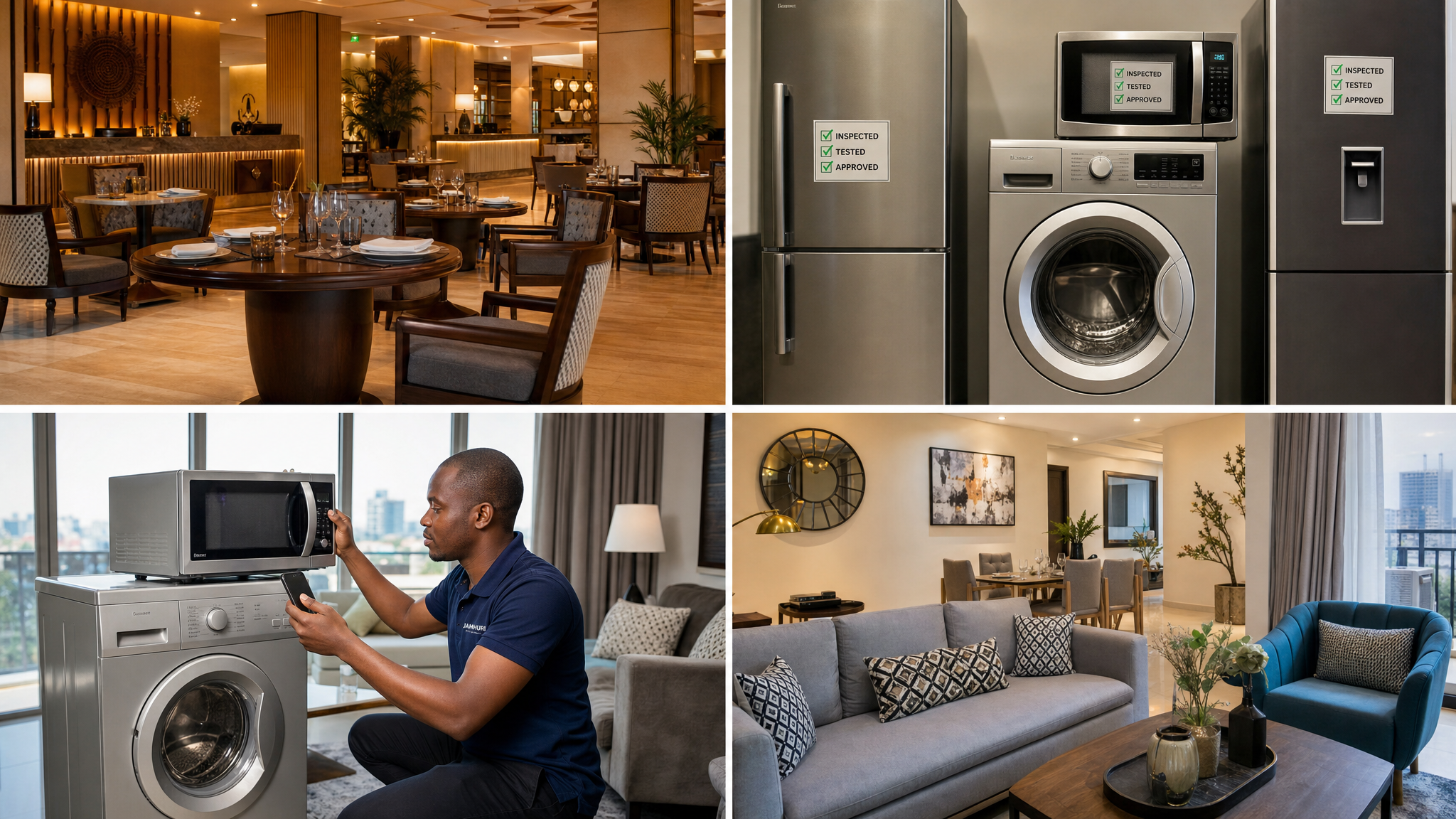
Corido Marketplace specialises in quality second-hand goods for Kenyan buyers and sellers. For hotel and commercial property sellers, Corido offers:
- On-site inspection of bulk assets in Nairobi and surrounding areas
- Structured offers for full or partial hotel lots
- Coordinated collection — no need to manage multiple buyers and multiple pickup days
- Payment upon agreement, processed securely
- Experience handling commercial-grade furniture, appliances, and equipment
Whether you’re closing a boutique hotel in Westlands, refurbishing a lodge in Karen, or liquidating guesthouse assets in Mombasa Road, Corido is the structured, professional option for bulk hotel asset disposal in Kenya.
Ready to sell your hotel furniture and equipment?
📞 0794858010 | ✉️ ask@corido.co.ke
📍 Lavington, Amboseli Road, opposite Serengeti Apartment, Nairobi | View on map →
🌐 corido.co.ke