Is It Worth Buying Second Hand Furniture in Kenya? 7 Smart Reasons Why Buyers Are Saying Yes (2026 Guide)
Is it worth buying second hand furniture in Kenya? The answer is a resounding yes — but only if you know what to look for.
In Kenya, where a new 3-seater sofa costs KSh 35,000–80,000 and a quality dining set runs KSh 40,000–120,000, buying second hand can save you 50–70% immediately. But the real value goes deeper. Smart Nairobi buyers aren’t just saving money — they’re getting quality furniture that lasts, accessing brands they couldn’t afford new, and making a sustainable choice without compromise.
This guide explains exactly why buying used furniture is worth it in Kenya, what makes a purchase low-risk, and how to spot the pieces that will serve your home for years.
Reason 1: Save 50–70% on Quality Pieces Without Skimping on Durability
The math is simple. A second hand solid wood dining table that originally cost KSh 90,000 might sell for KSh 25,000–35,000. A Grade A office chair from a departing expat, originally KSh 18,000, can be yours for KSh 6,000–9,000.
This isn’t a race to the bottom. Used furniture at quality-verified marketplaces in Nairobi holds its value because the original seller invested in durability. The pieces that end up for resale are often:
- Gently used office furniture from company relocations
- Expat household goods with 1–2 years of use
- Hotel and guesthouse furniture retired after 3–5 years of professional care
- Furniture from estates and liquidations — often premium brands
Compare this to new budget furniture that falls apart after 18 months. A used solid wood chair that has already proven its durability is objectively the smarter buy.
💡 Pro Tip: Look for furniture that was originally high-end. A 5-year-old quality teak sideboard will outlast a brand new particle-board one, and cost half the price. Original build quality matters far more than age.
Reason 2: Access Premium Brands You Couldn’t Afford New
Walk through Nairobi’s furniture showrooms on Ngong Road or Mombasa Road, and you’ll see price tags that shock: KSh 150,000 for an imported Italian leather sofa. KSh 80,000 for a designer office desk. These are premium pieces, built for 10+ years of use.
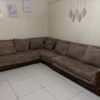
Here’s what most Nairobi renters and budget-conscious buyers don’t know: when expats leave Kenya, they liquidate these exact pieces. A genuine Italian leather sectional that costs KSh 180,000 new might be listed at KSh 55,000–75,000 because the seller is relocating and needs to move fast.
By buying second hand, you’re not settling for lower quality. You’re accessing the same premium brands and craftsmanship — just at the point when someone else has decided to move on.
This is why buying second hand is particularly smart if you’re furnishing:
- A rental property that needs to impress guests (a quality sectional sends a message)
- An office that needs to project professionalism
- Your home with heirloom-quality pieces you’ll keep for decades
Reason 3: Avoid the Depreciation Hit on New Furniture
New furniture depreciates like a car. A sofa costing KSh 50,000 loses 30–40% of its value in the first 18 months. After 3 years, it’s worth KSh 15,000–20,000 at resale.
When you buy second hand, someone else has already absorbed that depreciation loss. The piece you’re buying has likely stabilized at 60–70% of its current resale value, meaning your depreciation curve is flatter.
Real example:
- Buy a new sofa for KSh 55,000 → lose KSh 16,500–22,000 in value in 18 months
- Buy the same sofa used for KSh 28,000 → lose KSh 5,600–8,400 in value if you resell in 2 years
By buying second hand, you’re starting lower on the depreciation curve. That’s simple financial sense.
Reason 4: Know Your Furniture Has Been “Field-Tested”
When you buy new, you’re taking a risk. Will the joints hold? Will the fabric pill? Will the frame warp after a year?
Used furniture has been tested in real conditions. A 3-year-old office chair has been sat in daily. A second hand fridge has already proven it can keep food cold through Nairobi’s heat. A sofa that’s survived 2 years of family use shows you exactly how it ages.
This real-world proof of performance is worth something. You’re not gambling on unknown manufacturing quality — you can see how the piece has held up.
💡 Pro Tip: Ask sellers about the history. “Where was this used?” (home, office, hotel) tells you a lot. Office furniture was typically cared for professionally. Expat furniture was often bought premium and used lightly. Hotel furniture has a clear maintenance history.
Reason 5: Furnish Faster When You Need to Move or Renovate
In Kenya, when you’re relocating or setting up a rental property, time matters. You need furniture now, not in 6–8 weeks waiting for a factory order.
Used furniture is immediately available. A complete Nairobi apartment setup (bed frame, mattress, sofa, dining table, chairs, storage) can be sourced in days from available listings, rather than months coordinating different suppliers.
For landlords furnishing bedsitters or 1-bedroom units on a budget, this speed advantage is huge. You can list the rental property furnished and operational within a week.
Reason 6: Make a Sustainable Choice Without Compromise
Buying second hand is environmentally smarter — it keeps furniture out of dumps and extends the product lifecycle. But in Kenya, this isn’t just idealistic; it’s practical.
Furniture that would be considered outdated in showrooms (a 5-year-old executive office setup, a 10-year-old solid wood dining table) is often still pristine. By giving it a second life in your home or rental property, you’re getting a sustainable win that also happens to be the cheapest option.
For Nairobi businesses and property owners, this matters. It’s not performative sustainability — it’s the actual smart economic choice.
Reason 7: Verify Quality Without Guessing — Know What Grade A Means
The biggest fear people have about used furniture is: “Will this fall apart?”
The answer depends on where you buy. At platforms with quality verification and grading systems, used furniture comes with confidence. Grade A items have been inspected, assessed for structural integrity, and checked for defects. You’re not buying blind.
Compare this to buying new from an unknown online retailer (where you might receive damaged goods and face return hassles) or from someone on social media (where there’s no recourse if the sofa frame is cracked).
A graded, verified second hand purchase is actually lower-risk than some new furniture purchases. The verification system replaced the guesswork.
How to Know If a Second Hand Piece Is Actually Worth Your Money
Not every used furniture piece is a good buy. Here’s what separates smart purchases from mistakes:
Check for these green flags:
- Solid wood (not particle board or MDF) — tap it, listen for a solid sound
- Original condition cushions and fabric without stains or permanent odours
- All joints tight — no wobbling or creaking when weight is applied
- Missing features easily replaceable (drawer handles, minor hardware)
- Clear provenance (came from a home, office, or business liquidation — not a skip)
Walk away from these red flags:
- Sagging springs or cushions that don’t bounce back
- Visible structural damage (cracks in wood, bent metal frames)
- Persistent odours (mold, smoke, pet)
- Veneer peeling or large surface damage on high-visibility pieces
- Mechanisms that don’t work (sofa beds that won’t open, desk drawers that jam)
The key: focus on structural integrity and original build quality, not cosmetic age. A scratched solid wood table is worth it. A particle board cabinet with loose joints isn’t.
Where to Find Grade A Second Hand Furniture in Kenya
Nairobi has multiple channels for buying used furniture, but quality verification matters:
Verified marketplaces offer graded listings where furniture is inspected before sale. This removes guesswork and gives you recourse if something goes wrong.
Direct from businesses — contact hotels, offices, and landlords undergoing renovations. These transactions often come with better pricing because they’re moving volume.
Estate liquidations and relocations — when people or businesses leave Kenya, they often liquidate quality items. These sales are advertised on community boards and online.
Facebook community groups specific to Nairobi expat communities or property management often have pre-vetted sellers.
The pattern: The more transparent and organized the seller, the lower your risk.
The Bottom Line: Is It Worth It?
Yes, buying second hand furniture in Kenya is absolutely worth it. You’ll save 50–70%, access quality brands you couldn’t afford new, avoid depreciation losses, and reduce risk by buying items that have proven themselves in real use.
The key is:
- Buy from verified sources where quality is assessed
- Know what to inspect — structure over surface
- Match the piece to your use case — high-wear scenarios need proven durability
Whether you’re furnishing your first apartment, setting up a rental property, or renovating an office in Nairobi, second hand furniture is the smart financial and practical choice.
Ready to find your perfect piece? Start with a search for the furniture type you need, check the condition photos carefully, and don’t hesitate to ask sellers about the item’s history.
Next Steps
Looking for specific guidance on what to buy when moving? Read our guide: Best Second Hand Items to Buy When Moving House Kenya.
Or, if you’re still deciding, explore: How to Spot Quality Second Hand Furniture in Kenya: 7 Expert Checks Before You Buy (2026 Guide)
Have questions about pricing, delivery, or finding specific items? Contact Corido Marketplace — our team is here to help you make the smart choice.